
Phoenix Rising
Embracing Tests, Sensitivity, and Service


I’m ending a five-day period of sanctioned rest—a necessary pause to recover from burnout, finally acknowledged. It comes after six years of full and particularly intensive responsibility for life, shared by my beloved husband and me. The depth of that journey, and its many transformations, will be more fully understood in time.
For now, I welcome the phoenix who has appeared.
Today’s post honors the path of faith and the ongoing meeting of life’s tests. It is also inspired by my dear brother, Jack, whose recent act of care, compassion, generosity, and love revealed shining qualities of pure-hearted service. These spiritual qualities, expressed in action, are among the highest attainments in this life, and I was not only a witness to them, but deeply touched and grateful to be a recipient.
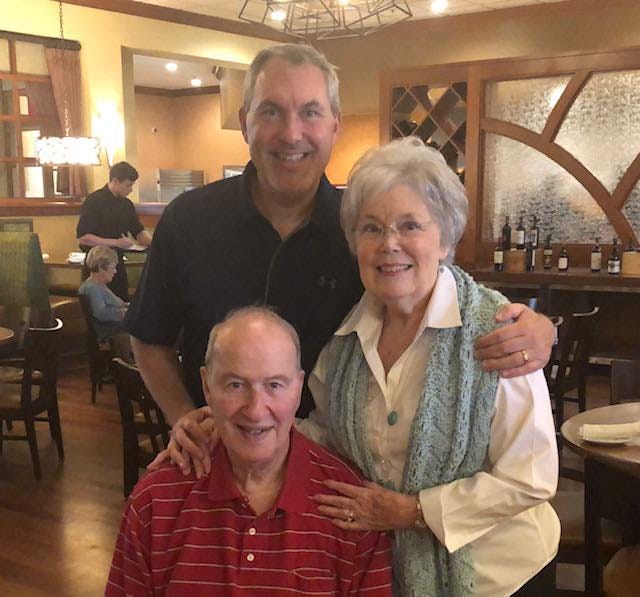
Jack and our parents.
Benefiting from Life’s Tests
All faith and wisdom traditions, from ancient to modern times, share many truths. One of them is that this world is a world of suffering—and that there is no way around it if we are to develop our fullest purpose and potential in this life and grow spiritually and morally.
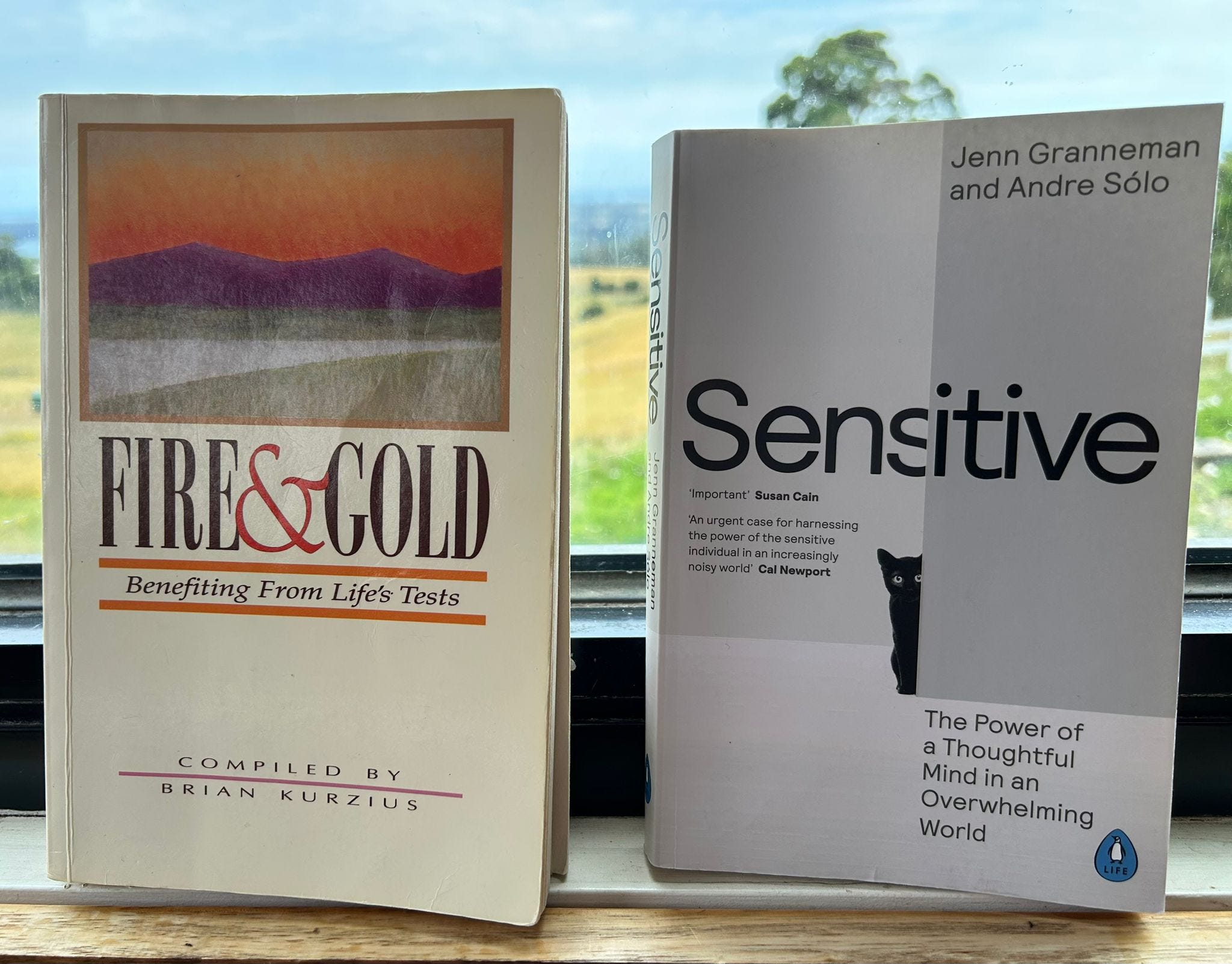
A powerful compilation from the Baha’i Faith on the theme of suffering—tests, difficulties, trials, ordeals, and calamities—is Fire & Gold: Benefiting from Life’s Tests, by Brian Kurzius (1995). I bought this book as a second-year Baha’i, twenty-four years ago, while living in Seattle, and I have returned to it many times since. I still remember the first time I read its passages and realized, with a sense of awe and wonder, how all my questions were answered in that moment.
The book is organized into three main sections: the purpose of tests, the causes of tests, and the solutions to tests. Little did I know then that my understanding of what lies within these pages would deepen year after year, through life’s journey itself, into a fuller comprehension of their meaning.
Such is the path of life for the one who seeks it.
According to Baha’u’llah:
. . the Almighty hath tried, and will continue to try, his servants, so that light may be distinguished from darkness, truth from falsehood, right from wrong, guidance from error, happiness from misery, and roses from thorns. Even as He hath revealed: ‘Do men think when they say “We believe” they shall be let alone and not be put to proof?
—The Kitab-i-Igan.
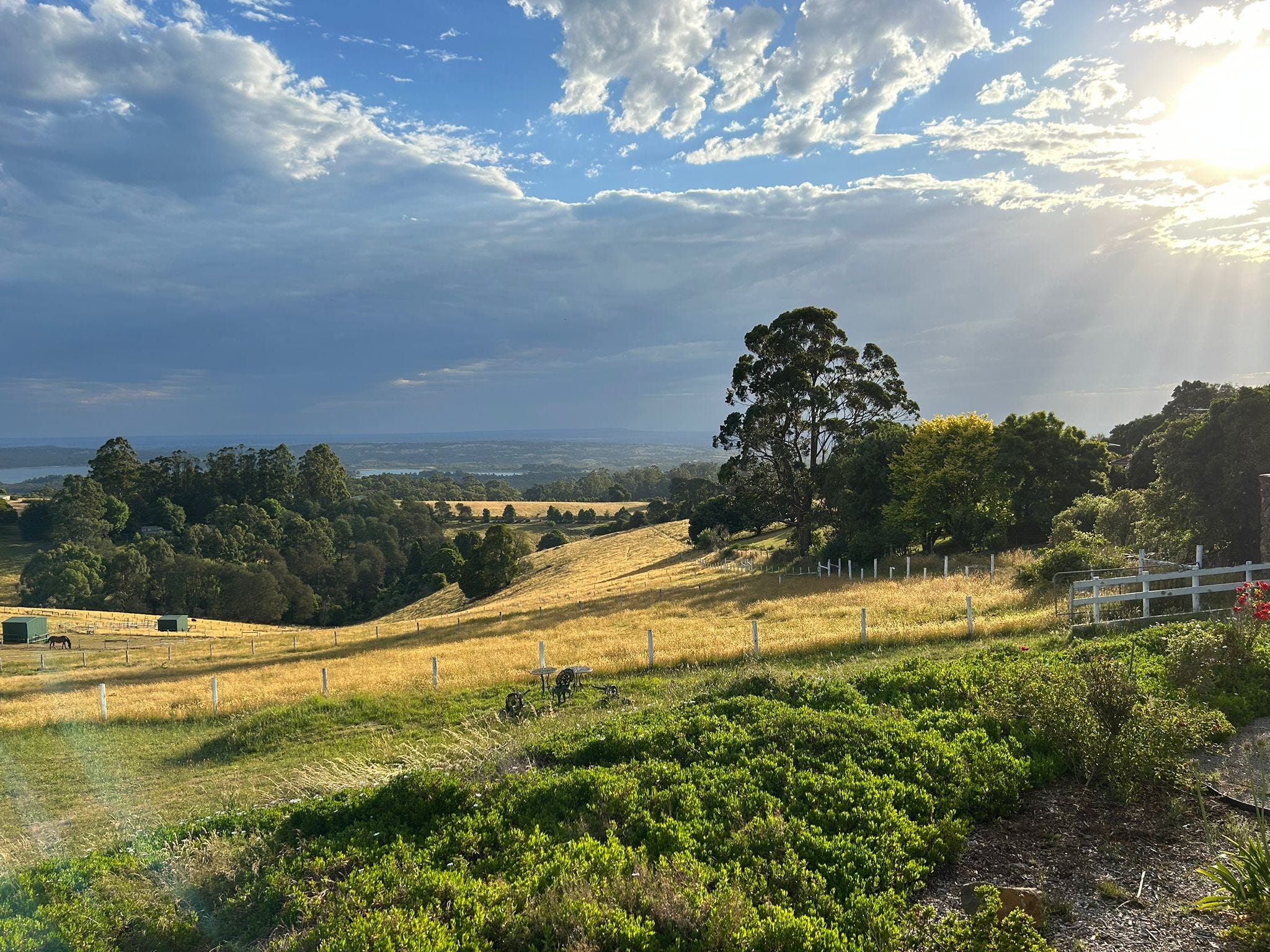
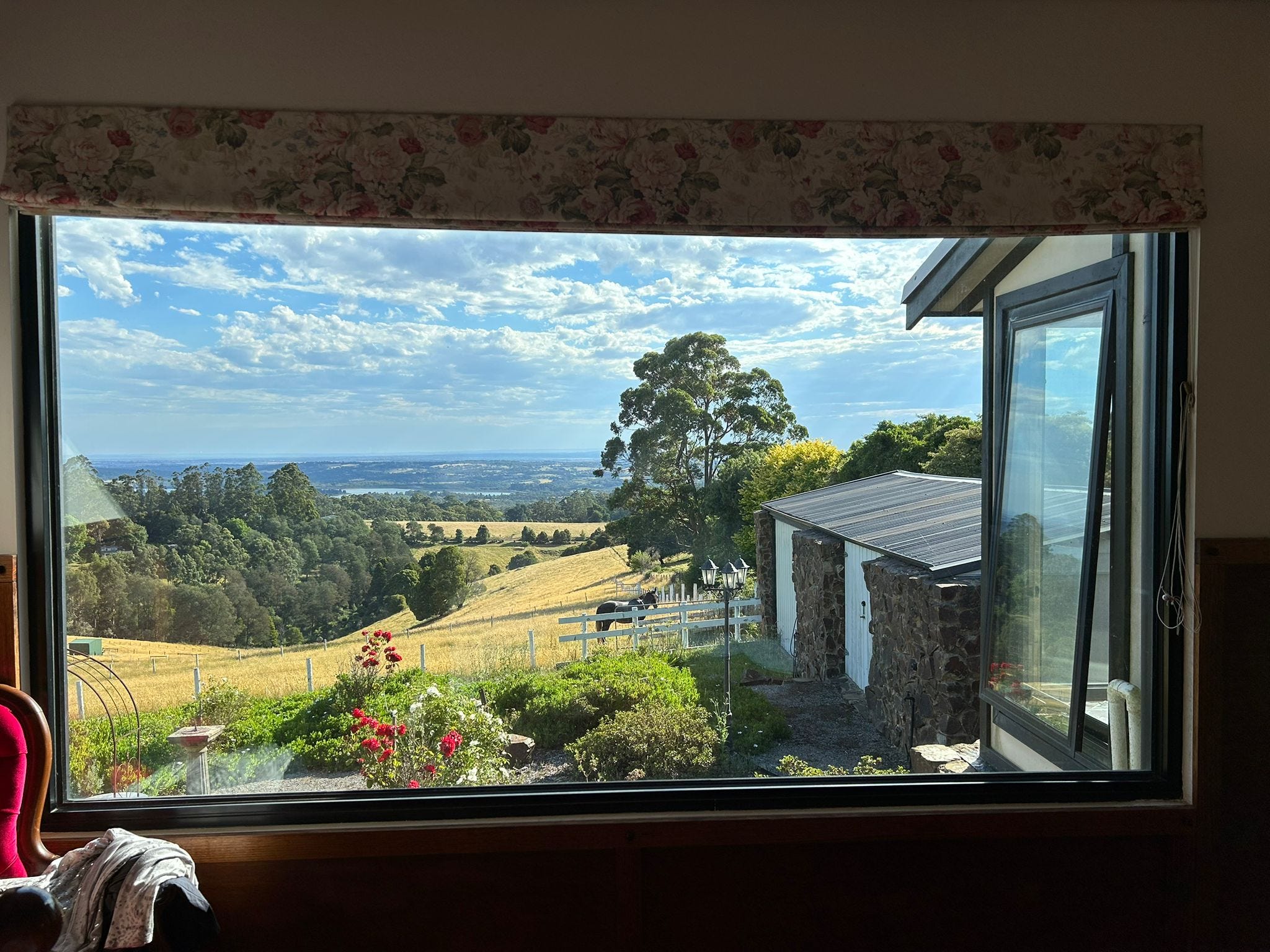
A Cottage With a View, Kallista.
In moments of arising from the ashes, when the cup of anguish has been at our lips and we have no choice but to drink it, Ruhiyyih Khanum—wife of Shoghi Effendi—reminds us that we must ‘‘drink it down strongly and courageously.’’ As she writes:
We must recognize how under duress great things are born. Diamonds form in molten rock. The sweetest flowers of man’s spirit have often been watered by tears. To struggle gives strength, to endure breeds a greater capacity for endurance. …
—Prescriptions for Living.
Refined Through Fire and Stone
Another part of my diamond has been formed—like that of anyone who meets their tests head-on. All the pain is but bounty.
Tests are benefits from God, for which we should thank Him. Grief and sorrow do not come to us by chance, they are sent to us by the Divine Mercy for our own perfecting.
— ‘Abdu’l-Baha’, Paris, Talks, p. 50.
In stronger character now, the newly arrived phoenix, another facet of the diamond revealed:
We must always look ahead and seek to accomplish in the future what we may have failed to do in the past. Failures, tests, and trials, if we use them correctly, can become the means of purifying our spirit, strengthening our characters, and enable us to rise to greater heights of service.
—From a letter written on behalf of Shoghi Effendi to an individual believer, December 14, 1941.
And as Shoghi Effendi further reminds us:
The road is stony, and there are many tests; but if we learn to live according to Bahá’u’lláh’s teachings, we will discover that they work indeed in mysterious and forceful ways; and that there is always help at hand, that obstacles are overcome, and that success is assured in the end.
—Shoghi Effendi, 23 April 1956, Living the Life, in Compilation of Compilations, Volume 2.
One of the goals I’ve embraced during these special five days is to operate and remain within the realm of reciprocity and receptivity—first with the Divine, and then with others. In doing so, I hope to receive the powers, energies, and fullness of capacity necessary for the work of the betterment of the world.
Consecrate and devote yourselves to the betterment and service of all the human race. Let no barrier of ill feeling or personal prejudice exist between these souls, for when your motives are universal and your intentions heavenly in character, when your aspirations are centered in the Kingdom, there is no doubt whatever that you will become the recipients of the bounty and good pleasure of God.
— ‘Abdu’l-Baha’, Promulgation of Universal Peace, no. 132.
Everything rests in the human heart—the seat of feelings and emotions, and of divine knowledge and understanding. Prejudice of all kinds must be eliminated.
The Sensitive Diamond
Research has shown that highly sensitive individuals often suffer more than those who are less or non-sensitive (Elaine Aron, Jenn Granneman & Andre Solo).
They feel more deeply—both the joys and the sorrows of life—and process experiences more intensely.
In a world that is not always positive, one can imagine the suffering these sensitives endure, as well as the capacity-building required to fully develop their extraordinary faculties: compassion, empathy, care, and acute awareness of what is needed for the well-being, peace, and security of all, both individually and socially.
I believe that part of my purpose of creation—as a highly sensitive person—is to promote understanding of human diversity, especially regarding highly sensitive individuals. This is not only to support HSPs in cultivating their gifts, but also to awaken non-sensitive individuals to their moral responsibility: to understand, respect, and honor these differences, so that suffering from misunderstanding or insensitivity is lessened. In many ways, highly sensitive people are leaders in waiting, called to guide, inspire, and nurture the world with their unique depth and awareness.
As Kurt Vonnegut observes in Sensitive (Granneman & Solo):
Artists [and all other sensitives] are useful to society because they are so sensitive. They are super sensitive… And when a society is in great danger, we’re likely to sound the alarms.
—Chapter 9, The Sensitive Revolution, p. 189.
This has always been true—in every space of society, from a personal encounter with anyone to challenges on the global stage.
A Journey Onward
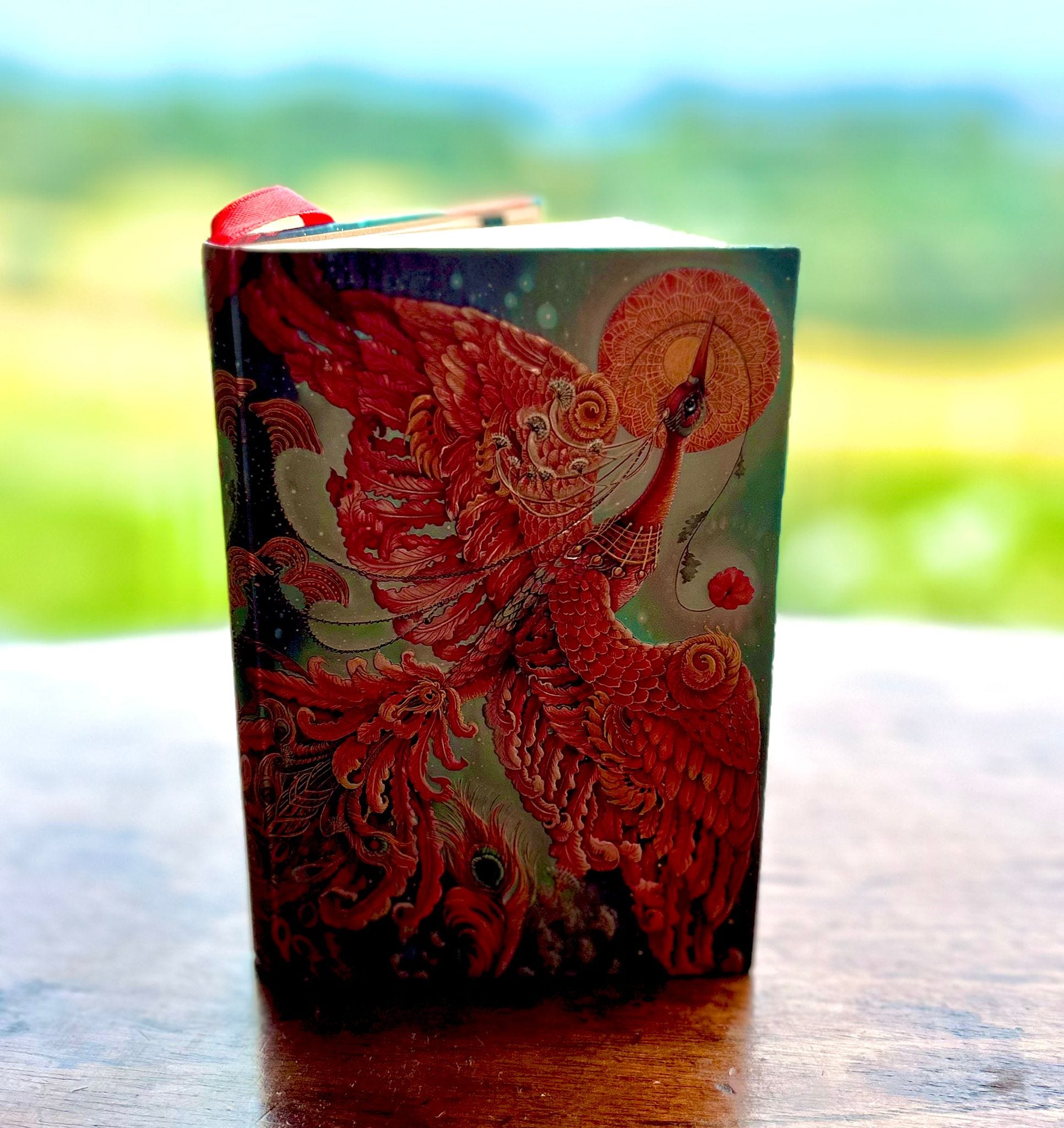
As I reflect, the little phoenix journal pictured below was given to me by a friend last year and saved until the right time. I used it to record the insights and synchronicities that emerged during a three-month plan of action to serve others. Beginning in late September and concluding on my spiritual birthday, 29 December 2025, it became a collection of powerful confirmations and moments of fire.
Now I can see how the book itself represents my own journey—emerging from the ashes of its burning self into a new creation.
Now is the time to act again from that new creation.
What part of your own diamond is emerging from the flames today?
O YE PEOPLE THAT HAVE MINDS TO KNOW AND EARS TO HEAR!
The first call of the Beloved is this: O mystic nightingale! Abide not but in the rose-garden of the spirit. O messenger of the Solomon of love! Seek thou no shelter except in the Sheba of the well-beloved, and O immortal phoenix! Dwell not save on the mount of faithfulness. Therein is thy habitation, if on the wings of thy soul thou soarest to the realm of the infinite and seekest to attain thy goal.
—Baha’u’llah, The Hidden Words, Persian #1
A Special Musical Tribute
Finally, during these special days, I have felt the profound presence of a most dear spiritual family member, Maggie Lindeman, whose passing anniversary coincided with this sacred time of reflection. A book could be written about Maggie. From her, I learned how to walk a spiritual path—through life’s tests, through joy and sorrow, through selfless service to all, and through a deep love for the sacred Writings. She chose this music for her farewell, and today I honor the vastness of her spirit: a powerful, beautiful, luminous example whose influence forever shaped my life and the lives of many others. May this music bring her joy in the realms above.
With gratitude to William Hui for his role in our unified devotional for Maggie.
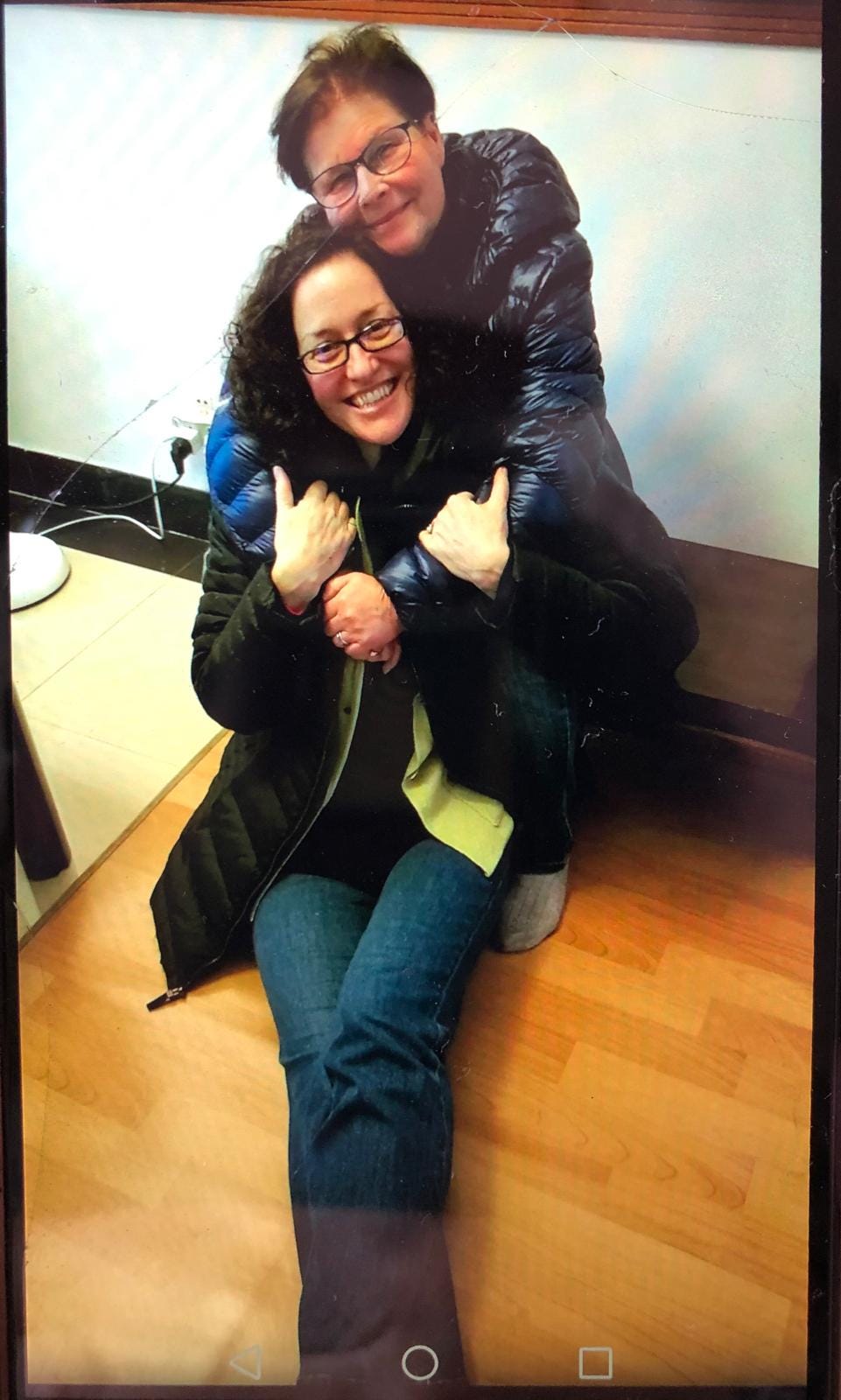
P.S. Many heartfelt thanks go to a few special souls whose kindness and support made these days possible. Their presence has been a blessing beyond words.
You write so eloquently. I have such good memories of your family.
Wow--so beautiful.